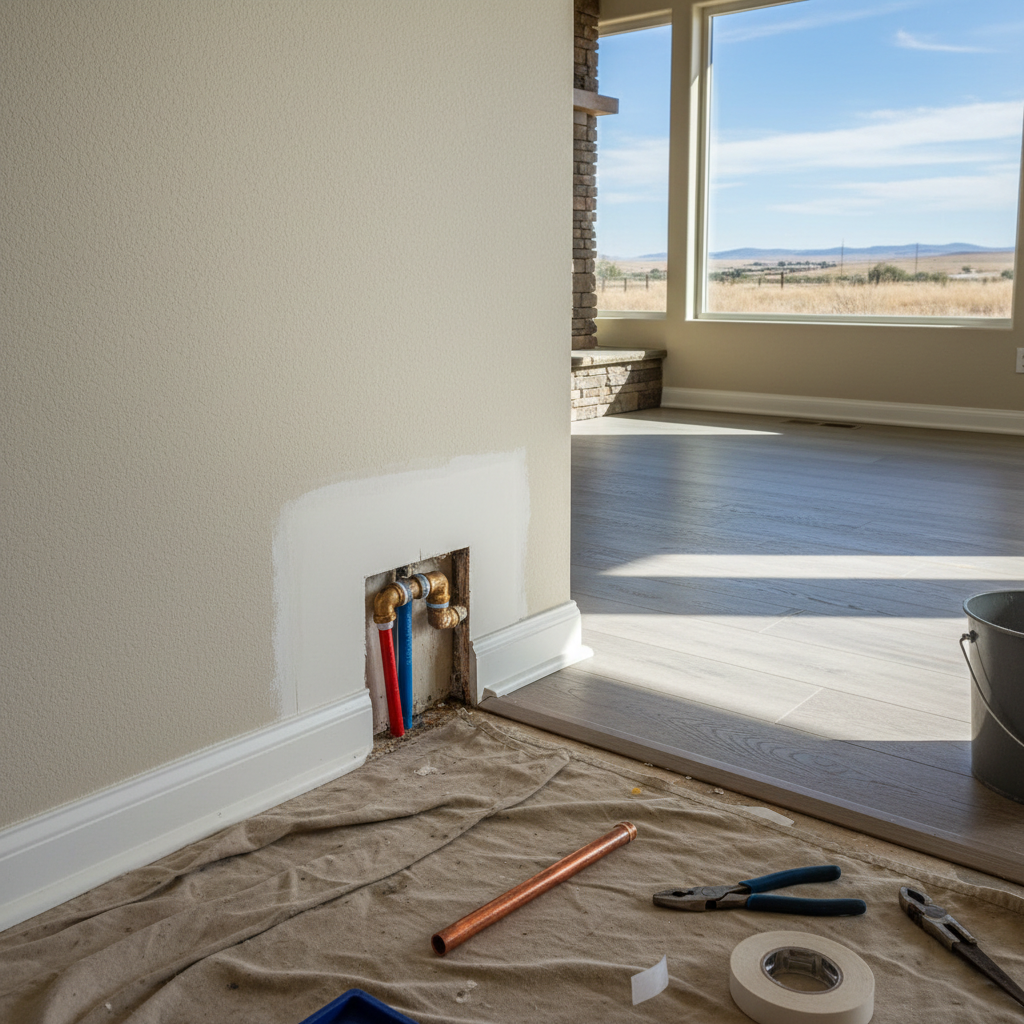
When a pipe lets go in the middle of a freezing Canyon County winter night, panic usually sets in fast. Out here near Notus, Idaho, where the wind sweeps across the open fields and drops temperatures deep into the teens, our plumbing takes a real beating. If you are dealing with a sudden indoor flood or a dripping mess behind a wall, you probably have a million questions running through your head. We will walk through some of the most common things homeowners ask us when dealing with Water Damage Restoration and a burst pipe.
What is the very first thing I should do when a pipe bursts?
Shut off your main water supply immediately. Do not waste time trying to find a bucket or figuring out how bad the leak is until the water is turned off. Every second counts when hundreds of gallons are pouring into your home. If you live in an older farmhouse or a newer build around Notus, your main shut-off valve is typically located near the front foundation wall, in the crawl space, or out by the water meter box near the property line. Make sure everyone in your house knows where that valve is before winter sets in.
How do I know if water has gotten trapped inside my walls or floors?
Surface water is easy to mop up, but the hidden moisture causes the real headaches. If your drywall feels soft, looks warped, or starts showing yellowish-brown rings, water is sitting inside the cavity. You might also notice a musty smell within twenty-four hours, or hear the faint sound of running water when all your faucets are closed. West Coast Restoration uses thermal imaging and moisture meters to track down hidden water before it rots your framing or sparks a major mold issue.
Should I call a plumber or a water damage restoration crew first?
Ideally, you need both, but call the plumber first or at the same time you call us for Water Damage Restoration services in Notus. A plumber has to fix the actual broken pipe and stop the active source. Once the water is turned off and the pipe is patched or replaced, our crew steps in to extract the standing water, pull up soaked carpets, set up heavy-duty air movers, and dry out the structure. Waiting days to start the drying process is a gamble you do not want to take.
Can I just use household fans and open the windows to dry things out?
Opening windows during a humid spring day or a freezing winter day in Idaho is not going to cut it. Household box fans move air, but they do not pull moisture out of the air or handle dense building materials like subfloors and studs. Professional Water Damage Restoration requires industrial dehumidifiers and specialized air movers positioned to create balanced airflow across saturated surfaces. Without proper structural drying, trapped moisture stays in your framing and leads to warped hardwood and hidden mold.
Will homeowners insurance cover burst pipe damage?
Most standard homeowners policies cover sudden and accidental water damage, such as a pipe bursting due to freezing. However, they typically will not cover damage caused by long-term, neglected leaks that you ignored for months. Take plenty of photos of the damage before any cleanup starts, keep a record of all damaged belongings, and call your insurance agent right away to open a claim for Water Damage Restoration.
How long does the entire cleanup and drying process take?
Every situation is unique, but a standard residential water cleanup typically takes anywhere from three to five days. It depends heavily on how much water was released, how fast we got the extraction started, and the building materials involved. Plaster, dense insulation, and multi-layer subfloors take longer to dry out than standard drywall. We monitor daily moisture levels until everything hits baseline dry standards before we pack up our gear.